
Ownership of your music copyright gives you leverage, protection, and power when it comes to making money from your music catalog. In this post, you’ll learn everything you need to know about owning, registering, and earning from your music copyright.
One thing to note up front: when you distribute with CD Baby, you retain 100% ownership of your music. We’re simply licensed to distribute it on your behalf, on your terms.
What is music copyright?
Copyright is your legal right to control, profit from, and distribute your own work. The moment your song is made into a fixed format – recorded or written down – you own it.
There are two types of music copyright:
- Composition: The music and lyrics of a song, typically owned by songwriters or publishers
- Recording: The recording of the song, typically owned by recording artists or labels
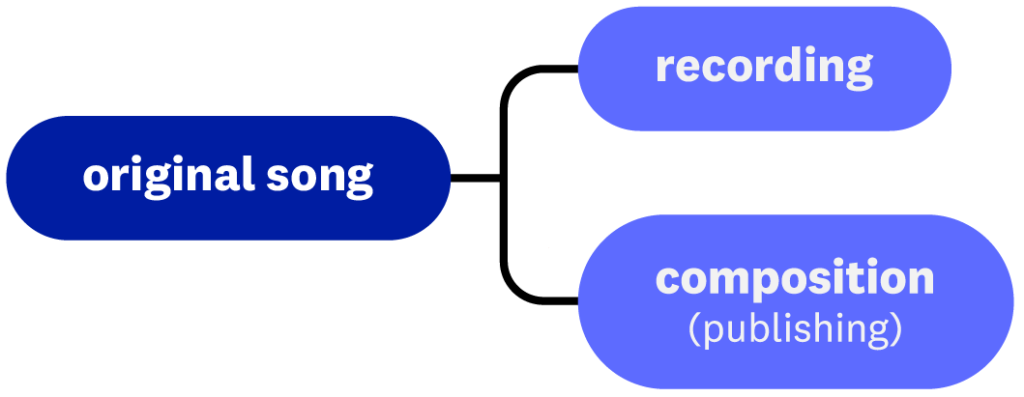
If you write and record your own music, you own both forms of copyright.
A song has one composition copyright, but can have multiple recording copyrights (e.g. if another artist records a cover of your song, they own their recording of it while you retain ownership of the composition).
How to work out songwriting splits
If you work with another songwriter to create a song, the copyright gets split into shares.
Under U.S. copyright law, two or more collaborators own equal shares of a work by default – unless you have a written agreement saying otherwise. That means even a small lyrical contribution can carry equal weight legally.
Document ownership by completing a split sheet that designates each collaborator’s percentage share of a song. If you submit that song for distribution, provide that same information in the songwriter credits section of your music metadata.
How to register your copyright
You don’t have to register your music with the U.S. Copyright Office to own your copyright — but it’s essential if you ever need to legally enforce it. You won’t be able to file a federal infringement lawsuit or claim with the Copyright Claims Board without it.
To officially register your music copyright yourself, you can complete forms from the U.S.Copyright Office below . Registration fees vary depending on your project.
- Form PA for a composition (music and lyrics)
- Form SR for a sound recording (this form covers both copyrights if authorship is the same)
If you’re a CD Baby artist looking to register multiple works at once, you can speed up the process by working with our partner Cosynd — for an additional fee. Government fees still apply to your submission, but Cosynd offers a discount to CD Baby artists here.
Licensing your music to others
Your copyright also governs how other people and companies can use your work. Here’s a primer on how you can control common uses.
Distribution
You must own the rights (or have the authority or permission from the owners) of music to distribute it. If you distribute your own music through an independent distributor like CD Baby, you retain any ownership and control of your music and grant us a temporary license to distribute it. That’s radically different from working with a major label or distributor, in which case you’re typically required to split ownership of the recording.
Publishing
This is a complex topic you can learn more about in our guide to music publishing, but at a high level, music publishing is the business of managing the composition copyright (music and lyrics) of a song — that means ensuring songwriters and composers get paid as their compositions are used. Music publishers register your compositional copyrights, pitch and grant licenses for others to use compositions, and collect royalties generated from each use.
Those royalties include:
- Mechanical royalties: Generated whenever a song is reproduced, whether sold as a physical copy, downloaded, or streamed on platforms like Spotify or Apple Music
- Performance royalties: Generated when a composition is performed publicly, such as on the radio, in a bar, or on a television broadcast.
- Synchronization fees: Generated when music is paired with visual media (e.g. films, TV shows, or advertisements)
You can register directly with individual organizations to collect each royalty in certain territories – or save time and streamline management by using admin services like CDB Boost or Songtrust.
CDB Boost is CD Baby’s publishing admin tool that registers your music with The Mechanical Licensing Collective (to collect mechanical royalties), SoundExchange (to collect digital performance royalties), and makes your music eligible for sync licensing. If you sign up for CDB Boost, we also recommend registering with a Performing Rights Organization like ASCAP, BMI, or SESAC to collect performance royalties, too.
Songtrust is a comprehensive music publishing admin service, empowering artists to retain full ownership of their music while collecting royalties from over 65 global pay sources in more than 240 countries and territories around the world.
Cover songs
Under the US Copyright Act, any song released in the United States can be covered under a compulsory mechanical license. This type of compulsory license is limited to nondramatic works (meaning it does not apply to songs from musical theater) and authorizes distribution in the United States only. The covering artist pays a statutory rate (currently 9.1 cents per copy) – typically through the Harry Fox Agency (HFA). Songwriters don’t have to approve it, but they do get paid.
Samples
All samples, no matter how short, require direct licensing from the rights holder. There is no minimum threshold. If someone wants to sample your work, they must contact you (or your label, if applicable) and negotiate terms and receive explicit permission.
Sync licensing
When your music is used in film, TV, ads, or similar instances, that’s a sync license. A music supervisor must clear rights with you directly or through a music library before using your music. If you hold both composition and recording rights, you can license both in one agreement. You can get started with sync licensing by signing up for CDB Boost here.
Protecting your music in the age of AI
AI-generated music, fraudulent uploads, and botted streaming activity present real threats to independent artists. Your registered copyright is your first line of defense – along with CD Baby’s rights infrastructure that’s built to protect your music and get you paid.
Our Social Video Monetization service also works across social video platforms to ensure your music is identified, claimed, and monetized properly every time it’s used – not exploited without your permission.
As a preferred partner of major platforms like Spotify and Apple Music, we’re helping lead the way to develop more transparent metadata, profile protections, and other safeguards to protect artists from fraudulent activity.
From your distribution agreement to the infrastructure that keeps your metadata clean across over 150 platforms, CD Baby is built to protect the work of authentic independent artists at every level.
Own your music with CD Baby
Your copyright is the foundation of your music career — it’s what ensures you get paid and your work stays protected. When you distribute with CD Baby, you never lose ownership of your music copyright. That’s been our mission since 1998: giving artists the tools and support to find their fans and build careers on their own terms.
Ready to release? Create a free CD Baby account today and get your music on 150+ platforms.