
Did you just release new music? If you’re like many artists, you probably went all-in on the release rollout, promoting your music for weeks and spending release day hitting refresh on all your social feeds. Now, you might be quietly stepping back, hoping the song will find its audience.
That instinct is understandable — music marketing campaigns are exhausting and many release strategies treat release day as the finish line. But stepping back too soon is one of the most common ways artists lose momentum. Now that your release is live, the real work (and payoff) begins.
Here are five proven ways you can maintain momentum after release day as an independent artist.
1. Play shows
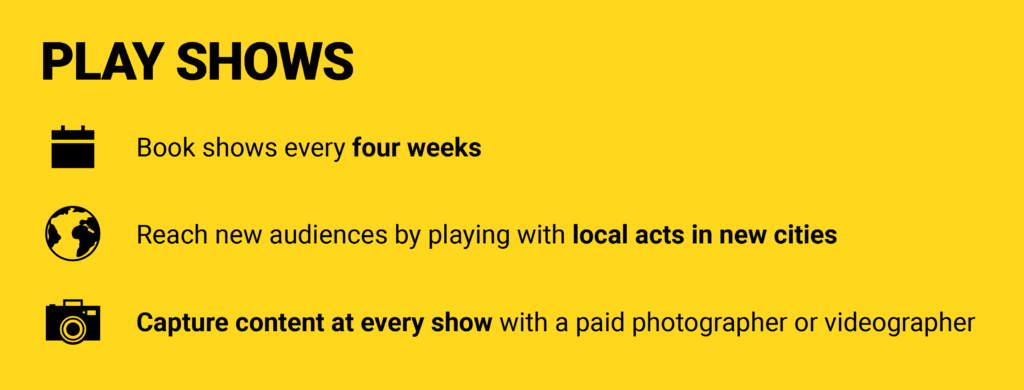
One of the best ways to grow an audience for your music is performing live. The reason it works is because live shows both deepen the connection with fans who already know your music and provide critical exposure to new listeners. It’s an added benefit if shows feel less like promo and more a natural part of your creative process.
If you didn’t organize an official release show, plan that first. As you begin gaining traction and connections in your hometown, branch out to adjacent cities to reach new audiences. Organize shows every four weeks to maintain momentum.
Every live show is an opportunity to build your email list, stock your social media content calendar, and sell merch. Line up a photographer or videographer for every show to capture engaging content. Offer an email signup at your merch table — you can drive signups by offering free perks or running a giveaway — and always have a few merch items to sell.
2. Develop your brand on social media
If you’re just getting your start as an artist, your pre-release campaign was probably a lot of introductory content — putting your music in front of new listeners, experimenting to find what resonated, and building anticipation for the drop. Now that your release is live, it’s time to solidify your artist brand.
That means shifting out of promo mode and thinking about world-building. Every piece of content is a decision about your aesthetic, tone of voice, and values. If you build a world around your music, fans won’t just keep listening — they’ll share your music with friends.
A few practical guidelines to make that possible:
- Find a posting cadence you can sustain — for most artists, three to four times per week is the target. It’s not just about playing to the algorithm, it’s about demonstrating commitment to your fanbase.
- Increase your content output by planning content in advance and creating it in batches. Filming a music video? Capture behind-the-scenes footage, do a quick self-recorded interview about the process, and generate spin-off art from the visuals and themes for use across your channels.
- The most effective post-release content goes deeper, not broader. Instead of continuing to push the release link, share the story behind the song, the influences that shaped it, the moment you knew it was finished. Think more narratively instead of promotionally.

3. Release related tracks
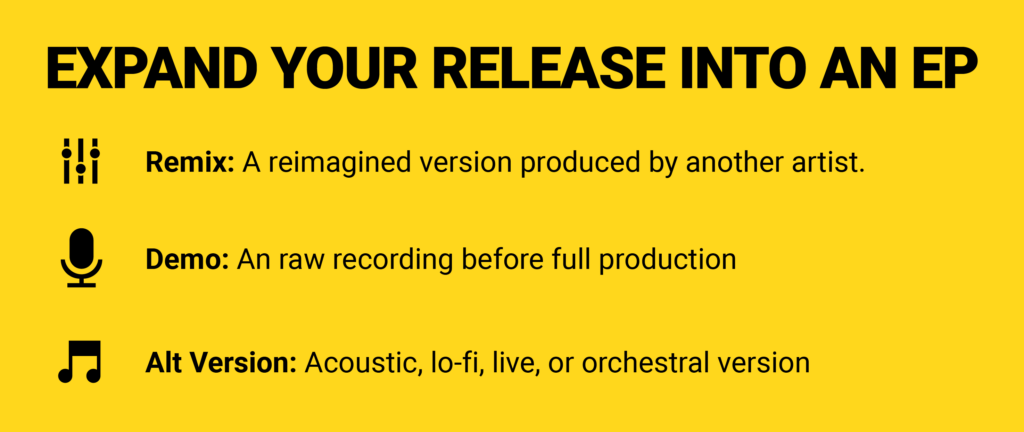
If a new track is gaining traction, capitalize on it by releasing the demo, an alternative version, or a similar track, and if applicable, package it as an EP. That gives current fans a reason to re-engage and gives you a new material to work with.
Each format serves a different purpose.
- A remix can help you reach an entirely new audience of the artist that creatively reimagines your track.
- A demo — the raw early recording of a song before it’s fully produced — gives your most dedicated fans the chance to see behind-the-scenes.
- An alternative version — acoustic, orchestral, lo-fi, or live — reaches listeners who connect with a different energy than the original. It also gives playlist editors and DSPs fresh material to work with.
When deciding where to start, follow what’s already pulling at you. If there’s a demo recording you can’t stop coming back to, that’s a sign it’s worth releasing. If the song took on a new life through playing it live, record that version. If a remix with another artist has been in the back of your mind, make the call. Release the version that feels most alive to you right now.
4. Build your email list
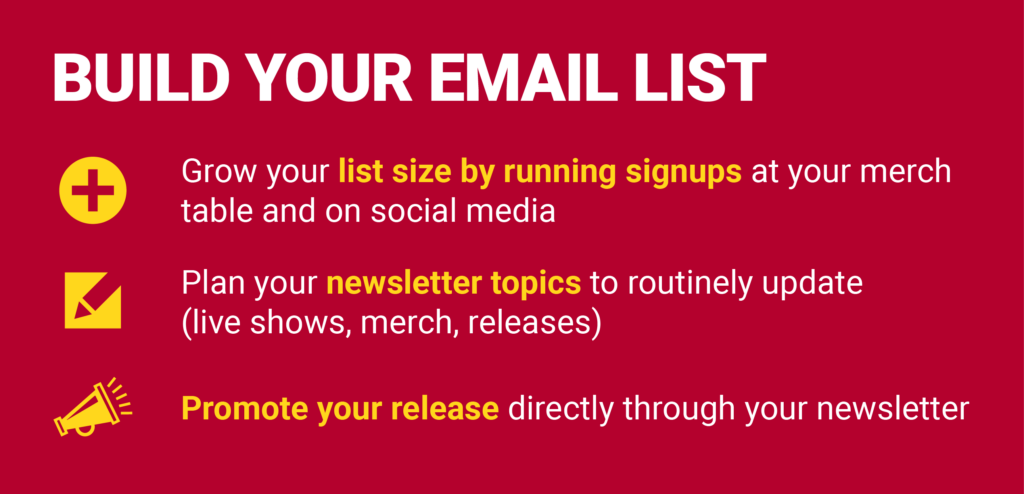
Of all the tools available to an independent artist, an email list is the one audience channel you actually own. While reaching your social media following depends on the algorithm, your email list provides a direct line to all your fans.
The key is giving fans a reason to sign up. Offer something worth exchanging an email address for — a cheap merch item like a sticker, pin, or magnet — and promote your list at shows, over social media, and on your website.
Once fans are on your list, create a cadence for a newsletter and some routine topic pillars: upcoming live shows, life updates, stories from the road, goals of the month, and more.
5. Celebrate milestones with fans
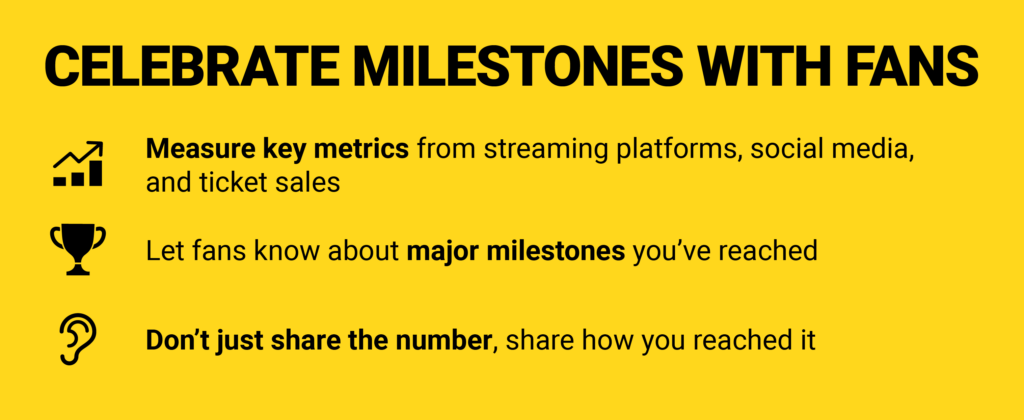
Your wins can be just as exciting for fans. Whether it’s your first 1,000 streams or an editorial playlist placement, these milestones aren’t just personal achievements. They’re opportunities to make fans feel included in your story and deepen the sense of community around your music.
When you hit a milestone, acknowledge the metric then tell a story about how you got there. Shout out specific fans, mentors, collaborators — anyone who helped along the way. Making your celebratory post personal and community-driven will give greater meaning to the numbers and signal to fans that there’s real momentum behind the music.
In conclusion
Maintaining momentum after release day comes down to one thing: giving fans a reason to keep caring. That means staying visible with a consistent marketing strategy, but it also means something bigger — building an artist brand that fans want to be part of. The artists who turn their releases into momentum are the ones who show up consistently, own their identity, and give their audience a world to belong to.
Ready to put these strategies into action? Sign up for a free CD Baby account today and distribute your music to over 150 platforms. Only $9.99 per single or $14.99 per album — no annual fees.