
“Writing about music is like dancing about architecture” – Unknown
Writing about yourself is hard. Writing about your music is even harder. But that doesn’t make your artist bio any less important. It’s often the first thing an interested journalist, fan, booking agent, or industry pro will look at to get to know you beyond the music.
This guide walks you through a clear process to help you pull together a professional bio. That includes what to prepare before you write, how to structure your bio for different uses, and what to include.
Why a strong bio matters
Your artist bio is important for three main reasons. First, it’s the main source of truth for the industry to get to know you and your music directly from the source. Second, every update to your bio is an opportunity for you to set the scene behind a release – sharing the story, people, ideas, and inspirations that fueled your project. And third, it’s a place where you can build credibility – in a few hundred words you can demonstrate that you take your music seriously and prove your success.
5 things to prepare before you write
Don’t start writing your bio from scratch. You can speed up the drafting process and ensure your bio hits all the right points by preparing some materials ahead of time:
- All your catalog metadata: From lyrics and genre to track titles and release dates, have this information handy to cite in your bio – at least for your most recent or upcoming release.
- Resume: This doesn’t have to be a formal document, but prepare a list of your recent accomplishments and major projects.
- A narrative: Trying to cram your life story and your creative life philosophy into a couple hundred words will not work. Instead, settle on a story that’s rooted in an upcoming release, recent goals, an idea you’ve been obsessing over, or your overall artist brand. Find a core narrative element to build your bio around.
- A few readers: When in doubt, lean on friends! Find a few friends or mentors in the music scene to help you plan your bio and/or review it once it’s drafted. They can provide valuable feedback on whether you’re effectively describing your music, hooking the reader, making accurate comparisons, and more.
- Press quotes: Including strong press quotes can build credibility within your bio.
How to write your artist bio in 5 steps
Now you’re ready to start writing your bio. Follow these steps to get your draft together.
Step 1: Lead with who you are and what you sound like
Hook the reader fast. Lead with your genre, mood, and a sonic reference point, but don’t feel boxed in by convention, either. You can open with a quote, a metaphor, or a quick story. The goal is to grab a reader’s attention and quickly establish who you are and what kind of music you make.
Step 2: Tell your story
You won’t have space in your bio to tell your life story, so focus on that narrative angle you prepared. Anchoring your bio in that story should allow you to seamlessly pivot out to discuss accomplishments and how this story frames your most recent or upcoming release.
Step 3: Name your influences
Reference two to four well-known artist names to help people orient to your sound. The goal is to give the reader context around your music by connecting it with music they know. Be intentional about the artists you choose – for press purposes, include at least one or two contemporary artists. Then, if you make a playlist around your release, ensure those artists are on it, too.
Step 4: Highlight your achievements
Drawing from the list you prepared, include a few noteworthy accomplishments, releases, events, and more to demonstrate momentum. Here, you’re aiming to show, not tell. Instead of saying “a growing fanbase” or “excellent live shows” provide some key streaming or social media metrics, the number of shows you’ve recently played (and perhaps sold out), and so on. If you’re very early in your music journey, you can share your goals and the work you’ve put into achieving them.
Step 5: Share your best press quotes
You can build credibility into your bio by including a series of press quotes. You can either cleverly weave them into the bio itself or list them below. If you’re still working up to press coverage, ask for quotes from collaborators, friends, and others. The goal is to gain credibility by demonstrating people care about your work.
Step 6: Close with what’s next
Don’t let your bio end looking backward. Close with something your reader can look forward to — an upcoming release, a tour, a collaboration, whatever’s on the horizon. It signals that you’re still growing and makes it clear the bio is current. That’s especially useful when you’re pitching to journalists: give them something their audience can anticipate, and you’ve just made their job easier and your story more timely.
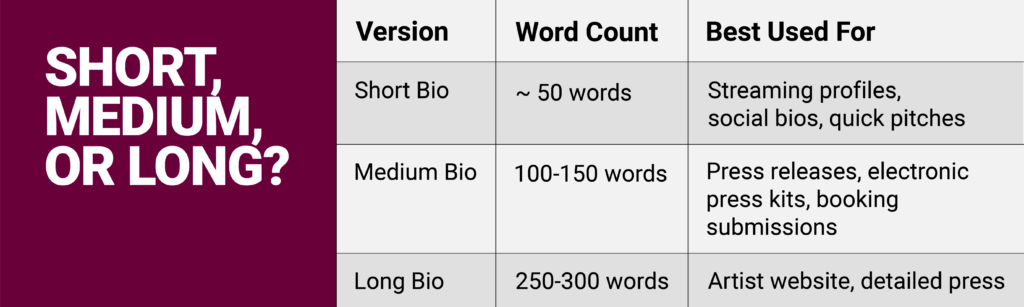
Short, medium, or long? A quick-reference guide
Not all bios serve the same purpose. If you followed the steps above, your bio is probably sitting somewhere between 250-500 words. Edit it down if necessary, then work on reducing it to medium and short lengths for additional purposes. Having multiple versions of your bio will ensure you’re ready for every industry opportunity that comes your way.
Start with a draft and refine
Your bio won’t be perfect on the first pass and that’s fine. As we noted in the preparation section, grab a few friends to review it for clarity and accuracy – continue to workshop it according to their feedback.
Once you’ve finalized your bio, ensure you’ve updated your other promotional assets. Check out the resources below for more help.