
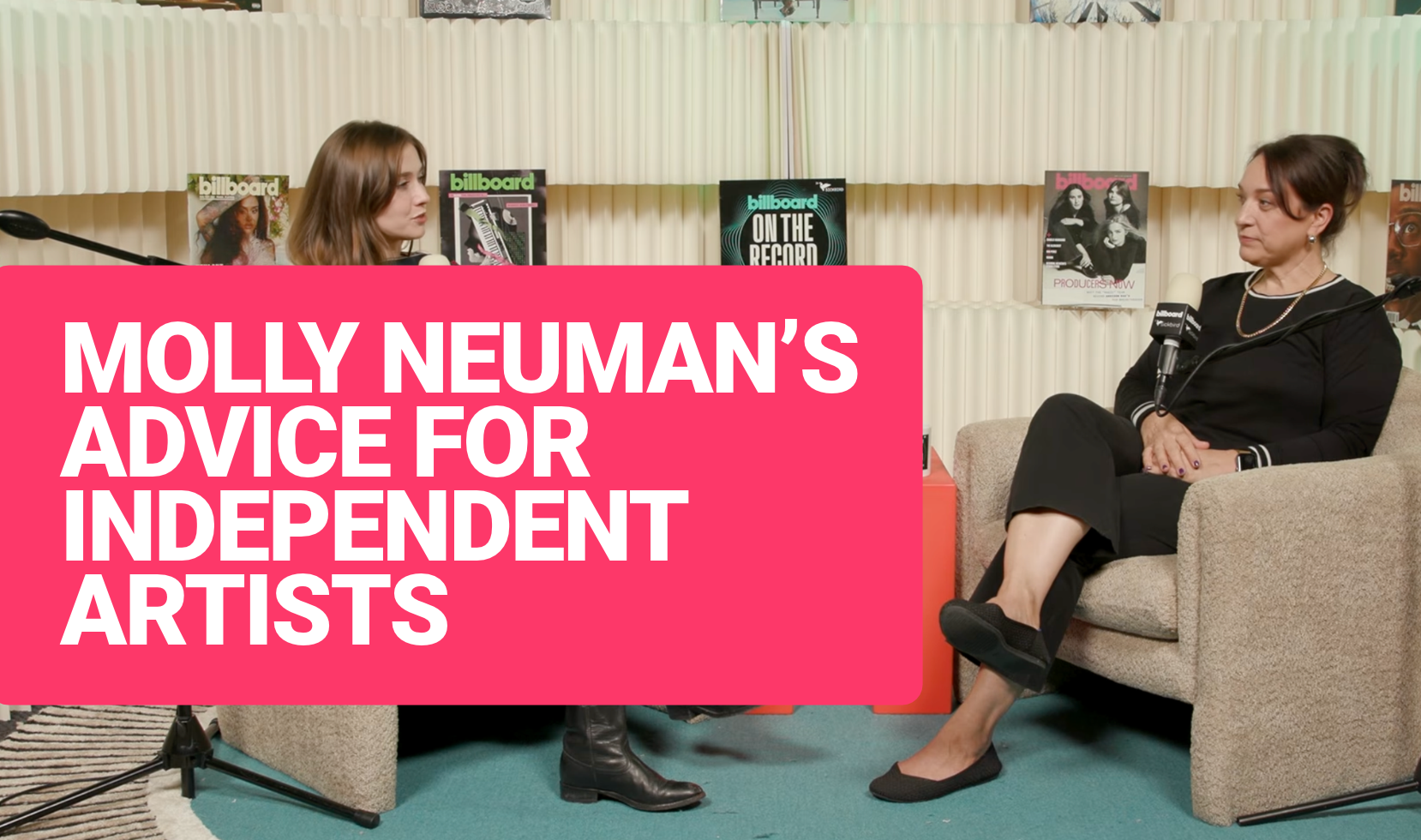
In October, CD Baby President Molly Neuman joined Billboard’s Kristin Robinson to discuss what it takes to succeed as an independent artist today. Drawing on her experience as the drummer for legendary feminist punk band Bratmobile and decades as an industry executive, Molly shared how artists’ needs have changed and how CD Baby is growing to meet them.
You can watch the full interview below and read our key takeaways to put Molly’s insights into action.
Interview excerpts have been edited for length and clarity.
Get out there: find your voice and build community
Don’t hold out for perfection. Your early releases can document your experience and sound while helping you find people who connect with your music. That’s what it was for Molly Neuman when she joined her first band, Bratmobile.
Kristin: I want to start at the beginning of your career, when you were starting Bratmobile. What did it mean to be an independent artist in practice in the early 1990s? What did you have to do to get those records out there?
Molly: We were interested in playing music as friends and going to shows. The easiest way to go to a show was to play one. It was really more about community, being inspired by our peers and people we admired, and wanting to do what we saw them doing.
But also, because we were women, we were motivated by the fact that we didn’t see as many women onstage or putting on shows, even though we knew they were there. We would literally go to record stores, comb through records, look in the back and see which bands had women in them. That was our path to discovering new artists and being inspired by them, and then realizing that we could also be musicians.
It really wasn’t a career- or exposure-oriented motivation. It was more about creation, the scene and the act of making music — just being present in that way. When it became, “We want to make a record,” it was more of a document than an attempt to sell a lot of records, if that makes sense.
It’s never been easier to release your music
Before digital distribution, getting records into stores often meant securing label support and investing heavily in manufacturing, inventory, and shipping. Those costs could be passed onto artists, with no guarantee that anyone would buy their records.
With independent distributors like CD Baby, today’s artists can pay once to release their music and reach listeners around the world.
Kristin: Back in the days of physical music, they had to manufacture a bunch of records without knowing whether anyone would buy them.
Molly: It was a high-risk business. The volatility of the 1990s, followed by file sharing disrupting physical music, made it extremely risky. I’ve thought and talked about the ways we’ve de-risked the business in many ways. Now we have different — and, in many cases, more complicated — issues. But the idea that you had to order 2,000 copies and spend $20,000 just to have the records sit on a shelf was real. In many cases, the records were returned… When you look at contracts from that era…there were return charges and other costs that often flowed down to the artist. There was no other way. There was no leverage.
But lowering the barriers brings about new challenges
Independent distribution allows anyone to get their music onto major platforms like Spotify and Apple Music. Latest data from Luminate shows approximately 150,000 tracks are uploaded to these streaming platforms every day.
That kind of volume is simultaneously giving independent artists the majority market share while making it harder for individual artists to stand out. About 90% of tracks never reach 1,000 streams. CD Baby is working to give artists the professional tools, guidance, and support they need to find their audience and truly get their music heard.
Kristin: How have you seen [the increase in uploads] change the music industry and impact independent artists?
Molly: The relationship between the volume of music and who’s listening to it — and all the connection points between those dynamics — is fascinating and difficult to understand. We know how many tracks we’re delivering each day. We know we’re not the volume player.
We also know that a lot of music is being heard in different ways. There are questions about what is happening when you consider the size of the human population, who has access to digital services and who subscribes to them.
As an industry, we’re trying to understand that complicated question while supporting the fact that people want to make music. They want to make it in their bedroom, they want people to hear it and there are audiences for it. People also want to discover new things. How do we make discovery work better amid all the volume and access — knowing so little of those tracks are actually listened to.
Here’s what it takes to succeed as an independent artist
Independent artists have more options than ever to build a career on their own terms. Making the most of those opportunities starts with knowing who you are and what you want to achieve. Throughout Molly’s perspective you’ll hear: take your craft seriously, learn to tell your story and connect with listeners, and choose tools and partners that support your goals.
1. Focus on your craft and connecting with an audience
The constant innovation of marketing services and music gear can make every release feel like it requires another investment. Molly encourages artists to be realistic — know where you are in your career and what tools you need to reach your goals.
Kristin: While things have gotten so much easier for independent artists, there are also new barriers that pop up, and that usually comes in the form of resources.
Molly: Yes. So how do you prioritize where you want to concentrate your efforts as an independent artist? I would certainly support being a little bit more in the, “Focus on the craft, focus on the work that you’re doing,” number one, and then focus on finding people that you genuinely can connect it to, starting with your family.
That audience can start small. Friends, family, creative peers, and people in your community give you somewhere to begin. Understanding what resonates with those listeners can help you build a strong foundation for your fan base.
2. Learn to tell your story and ask for support
Making music and inviting people to support it require different skills. Reflecting on her time at Kickstarter, Molly described how crowdfunding pushed artists to set measurable goals, tell a story behind their projects, and ask people to participate.
Molly: A lot of artists don’t want to think about corny terms like, “I’m a salesperson,” or, “I’m a marketer,” or any of the things that are not creatively genuine and pure, but that’s not very realistic, right? You have to be able to tell your story, to connect with people, and to be vulnerable.
3. Grow with professional tools and partners — not shortcuts
As your career develops, your needs will change. You might need help reaching listeners, managing a growing workload, or funding your next project. One of the main benefits of being an independent artist today is the flexibility you have in navigating industry technology and opportunities on your own terms. You can take what you need and skip what you don’t.
Kristin: It does feel like because there are so many options to stay independent and do that pretty sustainably for a while as your audience grows, it has forced major labels — or any large label — to offer a more friendly deal.
Molly: I think the flexibility available to artists now is really what is an improvement. You can decide, again, whatever the criteria you have, if a big check or access to a marketing team or whatever those things are, you can be in a position to say, “Yes, I want those,” or, “No, I’m going to find a way to do it on my own.”
But with power comes responsibility. Later in the conversation, Molly discussed how common scams like artificial Spotify streams can prey on emerging artists:
Kristin: Do not pay someone to get you on playlists. It happens, unfortunately, too often.
Molly: It really does — and I think it’s well-meaning artists, but they just don’t know. It is a vulnerability that is easy to take advantage of.
Sometimes you feel like you have to have a Ph.D. to understand what’s happening in the music industry. Lawyers who come from other categories of business look at our industry like, “What are you talking about? This doesn’t make any sense.”
So why would an artist in their early twenties — just super passionate about making music — know the ins and outs of this complex business and industry? We want to help people not be taken advantage of and give them a better experience.
Release your music with confidence
Molly’s advice gives independent artists a practical place to start: make music you believe in, learn to tell your story, and choose the right support that fits your goals. Each release is an opportunity to develop your sound, connect with listeners, and build toward the career you want.
For nearly three decades, CD Baby has empowered independent artists to release their music and grow careers on their own terms. Sign up for a free account today and pay just $9.99 per single and $14.99 per album with no annual fees to keep your music live.