

Halfway through 2026, a few key trends are emerging in the music industry, made clear by Luminate’s Midyear Industry Report released this month.
Here’s what independent artists need to know.
Looking for more music industry trends?
Check out our recaps of two cornerstone reports from 2025 — Luminate and IFPI’s Global Music Report — to get a confident grasp of topline industry stats and trends.
1. Fans are streaming more music than ever before
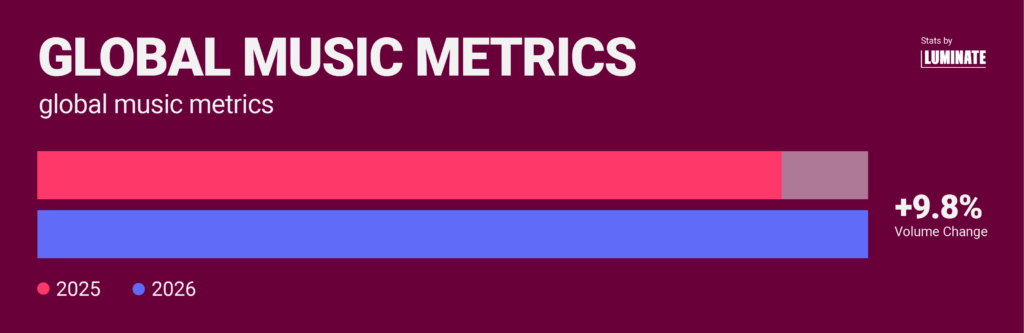
Global on-demand audio streams hit 2.8 trillion in the first half of 2026, up 9.8% from the 2.5 trillion streams in the same period last year.
What this means: Release your music to find your audience. Record-breaking streaming volume means more opportunities to build your fanbase.
2. Independent music distribution continues to grow
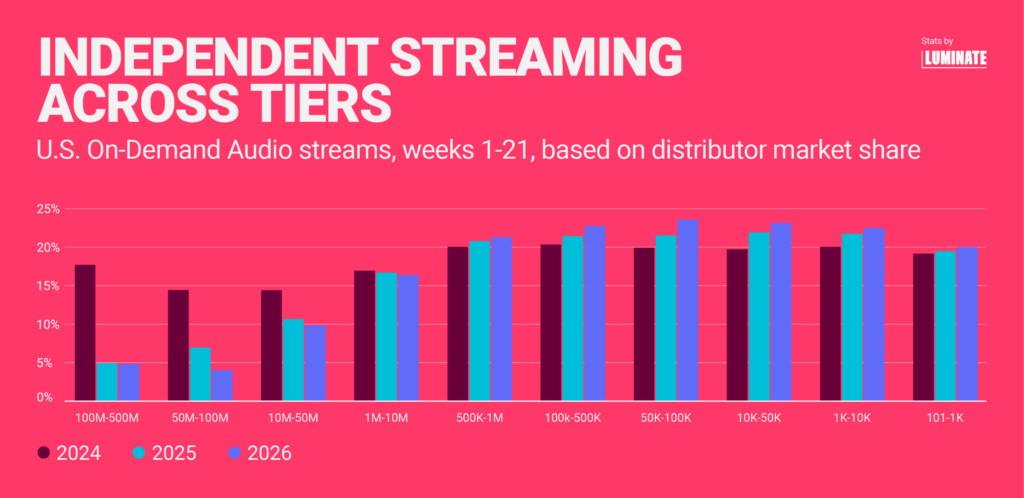
Independently distributed tracks have grown across the mid- and lower-volume streaming tiers, demonstrating how independent sectors are carving out a sustainable ecosystem outside the mainstream.
What this means: You don’t need a viral hit to lead a successful independent career. Focus on finding your niche audience, honing your brand as an artist, and leveraging the increasing array of marketing tools and services available to independent artists.
3. R&B/hip-hop declines slightly, while dance/electronic grows
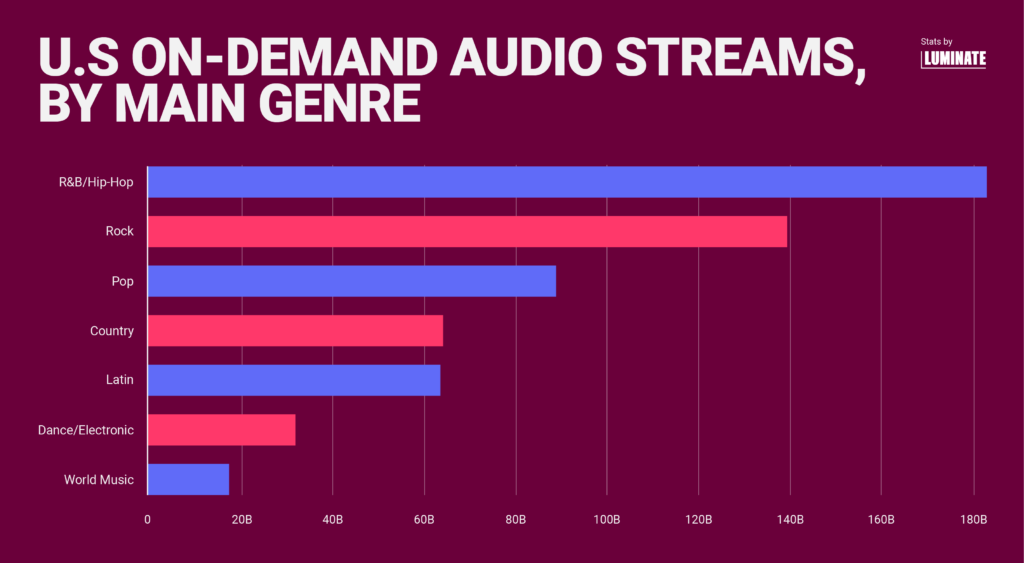
R&B/hip-hop slightly declined this year, losing a 1.6 share of points year-over-year. But make no mistake, the genre still dominates U.S. streams, accounting for about one in every four streams. Meanwhile, the dance/electronic genre saw the most growth (+18.9% year-over-year on-demand audio change).
What this means: You can take shifts in genre listenership as encouragement to experiment with your sound, but don’t chase the trends or lose sight of your own artistic identity.
4. CD sales outpaced vinyl, but there’s more to the story
CD sales grew 16%, outpacing vinyl sales that grew by a modest 2.4%. K-pop fans account for a significant share of this growth. So much so that excluding sales from BTS’ latest album ARIRANG and other K-pop sales, U.S. CD sales would have been up only 6.7% in the first half of 2026.
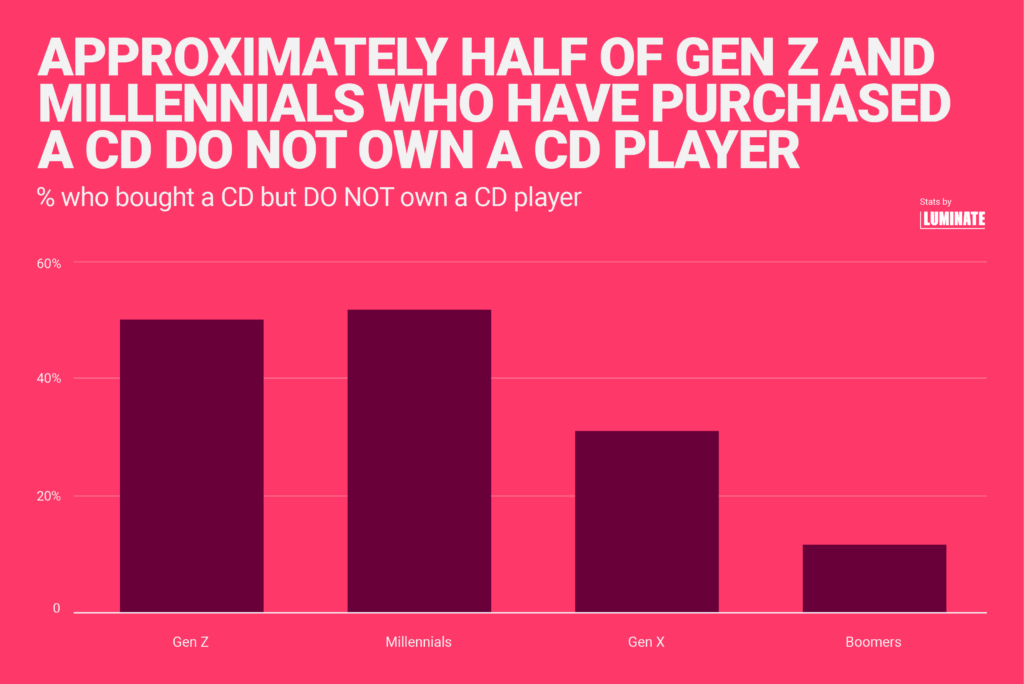
But interestingly, only half of the Gen Z and Millennial CD buyers actually own a CD player, signalling the act of buying physical music is about aesthetic ownership and providing financial support to an artist as it is listening to the music on the medium itself.
What this means: Don’t write off physical formats — or collectibles in general. Whether it’s actual physical releases (CDs, tapes, and vinyl) or standard merch items like shirts and stickers — give your fans a way to support you.
5. Rock music exemplifies the power of catalog music
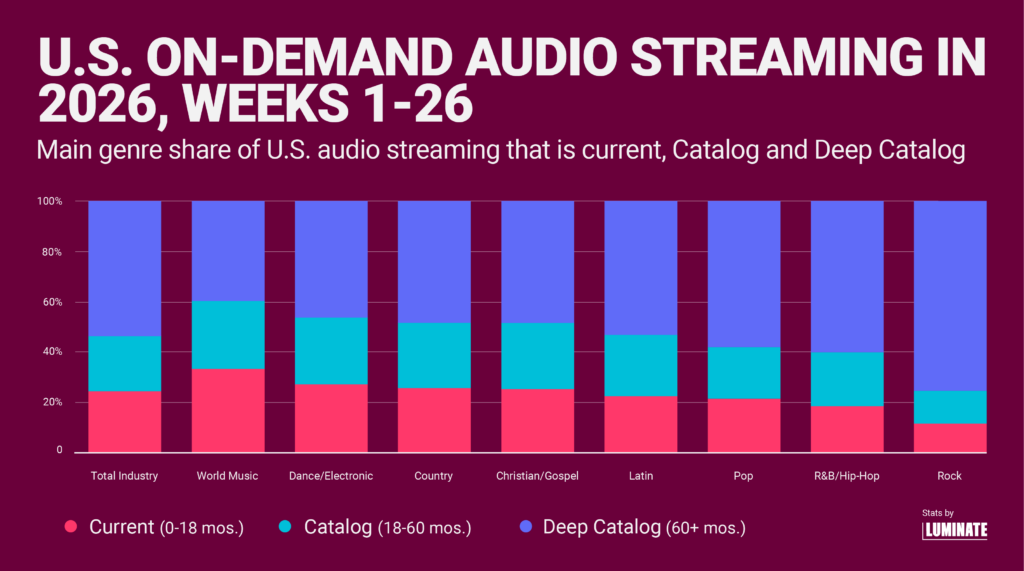
75% of rock listening comes from tracks older than 60 months — what Luminate calls “deep catalog” listening. That’s in contrast to a genre like world music, where 34% of streams come from “current” tracks (0-18) months and another 26.5% come from tracks that are five years old or newer.
What this means: No matter your genre, rock music proves you shouldn’t neglect your back catalog. Promote older tracks with the momentum you gain from new releases (e.g. “if you like the new track, listen to this one) and consider strategic re-releases and anniversary campaigns.
Make your mark on the music industry. Release your music with CD Baby.
Over two million independent artists trust CD Baby to distribute their music. Pay once per release and get your music on over 150 platforms worldwide — without annual fees.