House Concerts – The Lifeboats of the Music Industry?
[This post was written by guest contributor Fran Snyder, an artist and the founder of ConcertsInYourHome.com (CIYH), DinnerAndSong.com, and ListeningRoomFestival.com.]
“You never change things by fighting the existing reality. To change something, build a new model that makes the existing model obsolete.” – Richard Buckminster Fuller
Many artists will tell you that they simply could not or would not tour without the financial support of house concerts along the way. But money is just the tip of the iceberg. Below the surface we find that house concerts are bringing artists (literally) closer to their fans, and sometimes they even help artists rediscover what they enjoy most about playing music – the intimate connection with an audience.
What are house concerts?
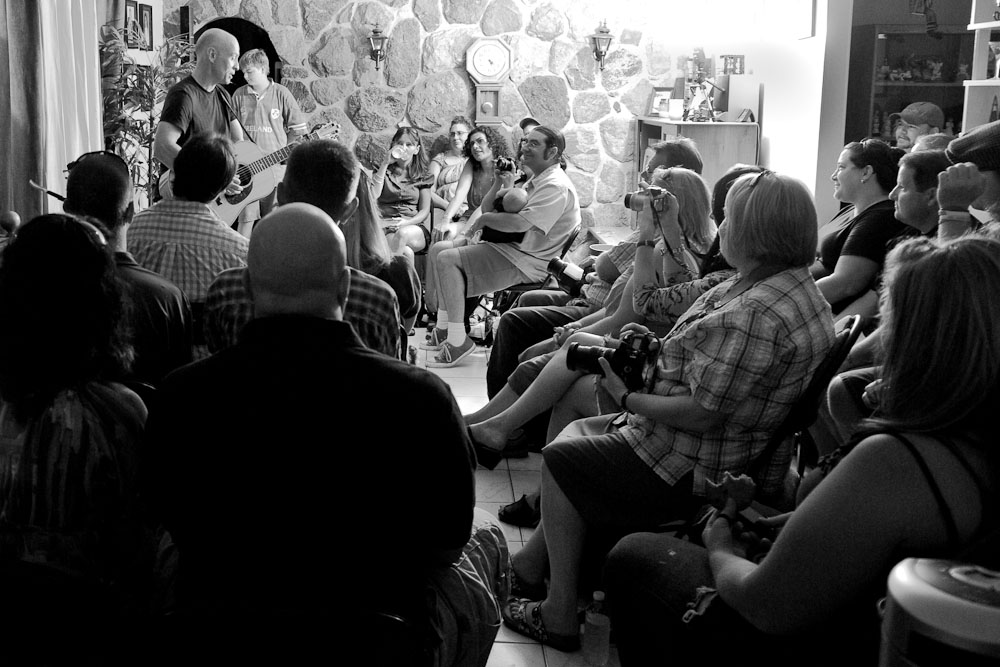
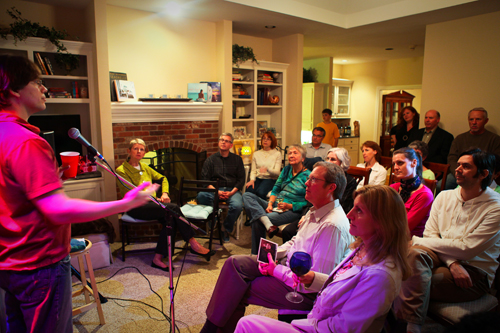
House concerts are private events in the homes of music fans. Friends, neighbors, and acquaintances are invited to attend a two set performance, and make a suggested donation of $10-20 per person. Often there’s a pot luck dinner or dessert, and it’s not unusual for guests to bring a beverage along with their favorite dish.
What’s the big deal?
Well, one of the key benefits of playing house concerts is the ability to play in markets where you don’t have a significant fanbase. Play a public venue and you are expected to draw (or sell a lot of booze.) Play a house concert and you are expected to be kind, fun, and damn good. Although house concerts usually welcome some local friends/fans of the artist, for privacy, safety, and legal reasons, the promotion is best done by hosts and their close friends.
And here’s the really big deal.
You get all the money. You get dinner and a place to stay. House concert hosts are volunteers and the most important new “patrons of the arts.” They host events because they love the music, and they love impressing their friends with concerts in their homes. There are thousands of them around the world. And now the tools exist for any artists to pitch the idea to their fans.
“House concerts are the emotional anchors of every tour.” – Hans York

Playing in homes is not for everyone.
If you’re interested in playing house concerts, it’s important to look at the advantages and disadvantages of your situation.
Most house concerts take place in average living rooms, with little or no PA provided. These shows are attended by people who will want to talk to you. They might sit within 3 feet of you, and they will be looking at you and listening to every word. This is not for shy artists. This is not for smelly artists. This is not for prima donnas. This is (usually) not for a full drum kit, backline and entourage.
If you’re looking at websites that support these events, you’ll also find that the majority of house concert events feature folk, acoustic, and original music.
Safety for artists.
First, for touring artists, we know that safety is a relative term. We know that talented artists occasionally forego a hotel once in a while to save money, and sleeping in your car at a rest area or in a parking lot has its own safety risks. Even when staying in hotels, travel involves uncertainty and requires some vigilance.
Staying in the homes of untested strangers should also involve some steps to minimize risk. Do you have mutual friends? Can you check each other out on Facebook? You can even search for registered sex offenders on the web. (In order to avoid them, of course.)
Many artists are now familiar with sites like Couchsurfing.com, and online communities (like CIYH) typically build in recommendation systems that provide testimonials from previous meetings.
It’s unfortunate that women, of course, face additional risks, and for this we advocate that they travel in pairs, or stay with referred/recommended hosts whenever possible.
Safety for hosts.
In terms of personal safety, the risks for hosts are a little different since artists are typically public figures. These risks are mostly associated with the potential for dealing with drug or alcohol abuse, dealing with night owls, and having a few unruly fans show up. These risks go up significantly if the host makes the mistake of promoting their shows publicly.
Why are house concerts having such a dramatic impact on the tours of small acts?
It’s important to look at some important trends that are not often discussed in music circles.
1. Demographics: There was a time when teenagers were the most important market for most genres of music. If you want to sell CDs, that time is gone. If you want to sell to kids, you need to be on the cutting edge of technology, and find a way to sell digital items to digital natives. However, we have this massive population of middle-aged folks, who own homes, have some money, and have spent 30-50 years buying LPs, cassettes, and CDs… they like taking home souvenirs after the show. Furthermore, they are often empty-nesters with at least one guest room and a desire to have more people around – and most of their friends are just like them. It’s no accident that acts from the 60s and 70′s and 80′s are still powerful concert draws and unavoidable on the radio. The baby boomers are kicking your teeny bopper audience’s ass.
2. Live music ain’t all that’s out there. In the past few decades, we’ve invented hundreds if not thousands of new diversions, and most of them you can experience without getting off the couch. Most people now go to one or two shows a year. This means that the audience for any particular event (live music or otherwise) is shrinking.
3. Ahem, profits? What happens when you build a touring infrastructure in the booming ’70s and ’80s and try to fill it in the slowing ’00s and ’10s? You have too many acts playing half-empty rooms, putting enormous promotional strain on venues and themselves. Traditional promotional costs continue to be expensive while the returns continue to diminish. Run a print ad for your next show if you want proof.
4. Label support – what’s that? Most touring acts have to develop new markets without any significant money or people behind them. That can be costly and depressing. Without a support system for developing artists, music fans and public venues will be worse off.
That’s why house concerts are good news.
By forgoing venue profits, embracing small acts, and serving older and smaller audiences, house concerts are now the best vehicle to get artists on the road without losing money. House concerts create an easy way for the massive middle and upper class baby boomer generation to become patrons of the arts. They don’t have to write five-figure checks – they just take in an artist they admire for one night. House concert hosts are also frequent contributors to fan-funding projects. Good friends to have.
How small are we talking about?
We’ve seen fruitful, fun evenings with as few as 10 attendees. Consider the value of:
1. a free place to stay
2. dinner
3. a show you didn’t have to promote
4. the opportunity to play for an attentive audience, who wants to hear your original music
5. friendships, return invitations, and other perks
After you factor those benefits in, how much money do you need to make for it to be a worthwhile evening? How many people’s attention would you actually have at a club or coffeehouse?
That said, the usual target for attendees is 25-35 people, and many house concerts draw more.
“It was one of the best live playing experiences of my career!” — James Casto
What about public venues?
House concerts are a great way to build your fanbase BEFORE you book the show at a club, where numbers are more critical. It doesn’t do you, the club, or the audience any good to play for a half-empty room. Not all house concert attendees will go to late night shows at rock clubs, but good listening rooms (think Eddie’s Attic, Passim, Bugle Boy, Coffee Gallery Backstage, etc.) often appeal to these folks.
What if I tour as a full band? Although there is an underground scene for “house shows,” there is less of a tradition for treating these acts as professionals. House shows usually cater to indie bands, and the party atmosphere tends to bring in less money. [At CIYH, we've found the distinction between "house concerts" and "house shows" to be a meaningful one. We like to emphasize the word "concert" to give a strong cue to the audience about the expected atmosphere.]
DinnerAndSong and DessertAndSong… Meaningful shows on weeknights?
House concerts tend to happen on weekends. The traditional format of 2 sets and potluck dinner can stretch these shows into 3 hour events, which is too much of a commitment for hosts and attendees who have day jobs. Since 2010, two new formats (DinnerAndSong and DessertAndSong) have made it easier to create in-home concerts on weeknights. DinnerAndSong is the most intimate, requiring only 8-12 attendees. They have a simple but enjoyable meal with the artist, and then a 40 minute concert following. The essential difference is that Dinner/DessertAndSong concerts are one-set performances.
DessertAndSong is the simplest and most flexible format, allowing the host to simply get a few pies and brew some decaf. Since the audience doesn’t have to gather around the dinner table, it also allows larger crowds to attend if the demand is there.
Another great advantage to these events is that they require even less setup. For a 40 minute show, many people are comfortable leaning against a wall, and you don’t have to rearrange furniture to set up neat rows of chairs. The DinnerAndSong is so intimate that it makes carting in a sound system almost silly.
The smaller audiences and donations for weeknight shows are usually more than offset by the benefits, when you consider the other choices available. Would you rather play a coffeehouse, pay for your sandwich, and then hunt for a hotel?
At ConcertsInYourHome, we encourage all new hosts to start with small exclusive events like DinnerAndSong. If they limit attendees to 5% of their email list, they are sure to turn away a good chunk of people who don’t RSVP right away. That is the absolute best way to build a buzz about a series and put it on the path to successful and sustainable growth.
Two Common Myths About House Concerts
Myth 1. They are all booked twelve months out or more.
This is because when you search for house concert hosts on Google, you are most likely to find the most popular ones. The most popular ones, of course, tend to be booked out for a long time. However, new people start up all the time, and your fans can certainly book something with you within three months when you know how to approach them.
Myth 2. House concert hosts only book name acts.
This again is an idea born out of search engines and reputations. Of course, the most popular/largest house concert series’ are going to attract name talent.
“House concerts have been the saving grace – allowing me to get my music to open and attentive ears.” — Mason Douglas
When you consider how little of the general population knows about house concerts, despite the fact that more than 10,000 of these events* happen each year, it’s difficult to overstate their potential impact. It’s always been incredibly difficult to keep an artist career afloat, and the music industry reminds some people of the Titanic. If that is so, you might consider house concerts as the lifeboats.
Helpful Resources:
House Concert Invitation Video
$100,000 email and tips for house concert booking
House Concert Websites/Communities:
What has your experience been with house concerts — as a host, attendee, or performer? Let us know in the comments section below.
[Photos courtesy of: J. Borger, Insight Photography, G. Givens, J. Birnie]